Barking is one of the most common complaints dog owners have, yet it is completely normal behavior. Dogs bark to communicate, and the trick to reducing excessive barking is figuring out what your dog is trying to say. Punishing the noise without addressing the cause usually makes things worse, because the underlying need never goes away.
Identify the type of bark
Different barks mean different things, and each calls for a different response.
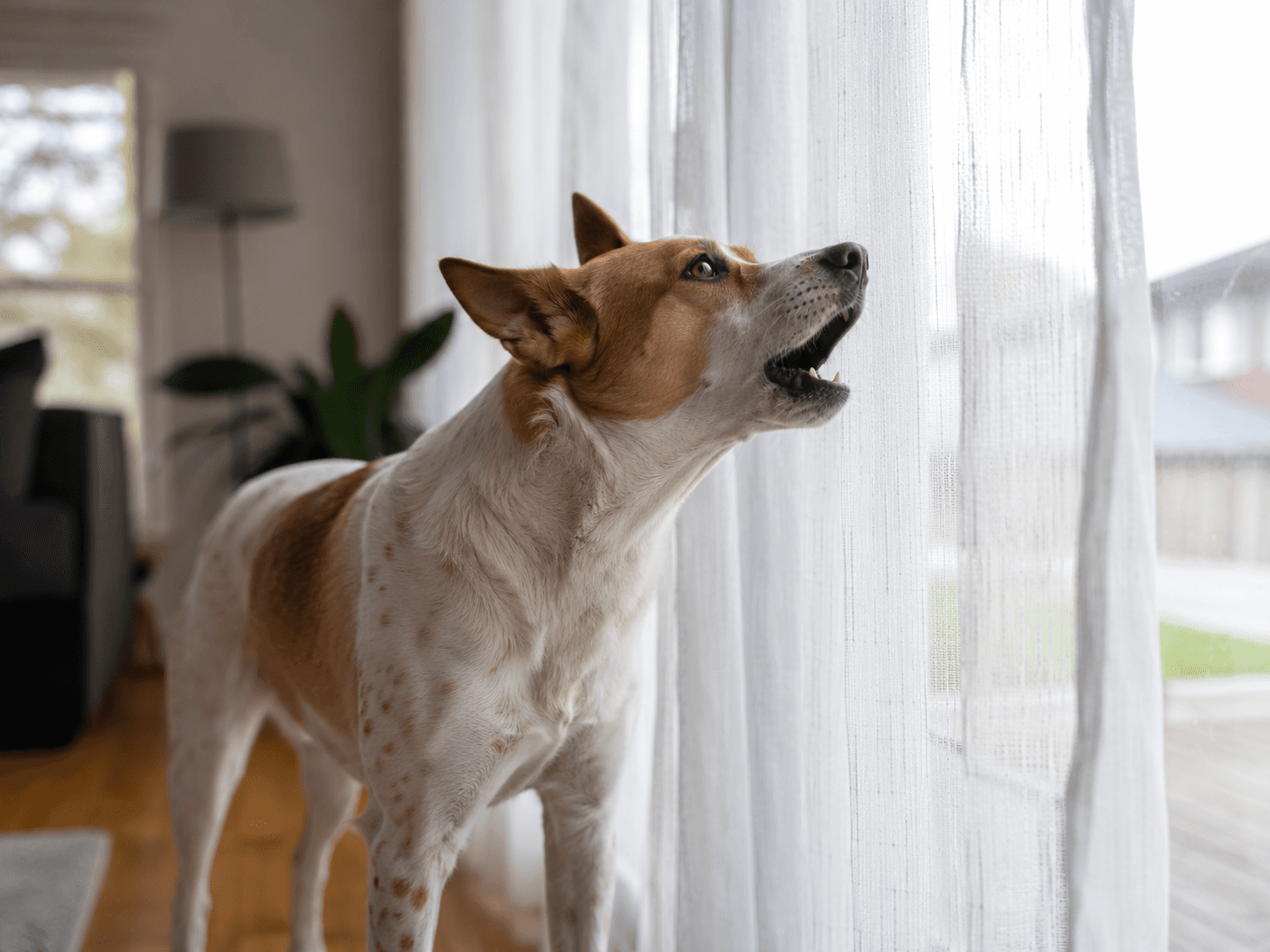
- Alert barking at sounds or people passing the window
- Demand barking for attention, food, or play
- Boredom barking from a dog with too little to do
- Fear or alarm barking at things your dog finds threatening
- Greeting barking from pure excitement
Spend a few days simply noticing when your dog barks and what happens right before. The pattern usually points straight to the cause.
Manage the triggers
Often the fastest relief comes from changing the environment. If your dog barks at people through the front window, close the blinds or use window film. If the doorbell sets them off, play a recording of it at low volume while feeding treats to change their emotional response. Reducing the number of triggers gives you room to train calmly.
You cannot train a dog to be quiet in the middle of a barking fit. Set the situation up so the barking rarely starts, then reward the quiet.
Reward the behavior you want
Dogs repeat what works. If barking gets your attention, even a scolding, it may be rewarding to a bored dog. Instead, catch and reward quiet moments generously. Teach a "quiet" cue by waiting for a pause in the barking, marking it with a "yes," and treating. Over time your dog learns that silence, not noise, earns your attention.
Meet the underlying need
A dog barking from boredom needs more exercise and mental stimulation, not a correction. A dog barking for attention needs scheduled play and affection so they are not left to beg for it. A fearful barker needs distance from what scares them and a slow, positive reintroduction. Address the root cause and the symptom fades.
Avoid shortcuts that backfire
Shock collars, citronella sprays, and yelling may suppress barking briefly, but they add stress and can create new problems like anxiety or aggression. They also do nothing to teach your dog what to do instead. Kind, consistent training takes a little longer but produces a dog who is genuinely calmer rather than simply afraid to make noise.
Track your progress
Because barking changes gradually, it helps to keep a simple log for a couple of weeks. Jot down when your dog barks, what set it off, and how long it lasted. Patterns jump out quickly on paper, and you will often spot triggers you had not noticed, like a certain time of day or a neighbor's routine. A log also shows you real improvement, which is encouraging on the days it feels like nothing is working.
Be patient and consistent
Barking habits form over time and they unwind over time too. Everyone in the household needs to respond the same way, or your dog will keep testing which approach works. Stick with it, reward the quiet, and you will hear a real difference within a few weeks.
Want a plan built for your dog?
Get a free, personalized training plan in about 2 minutes.
Create My Free Plan