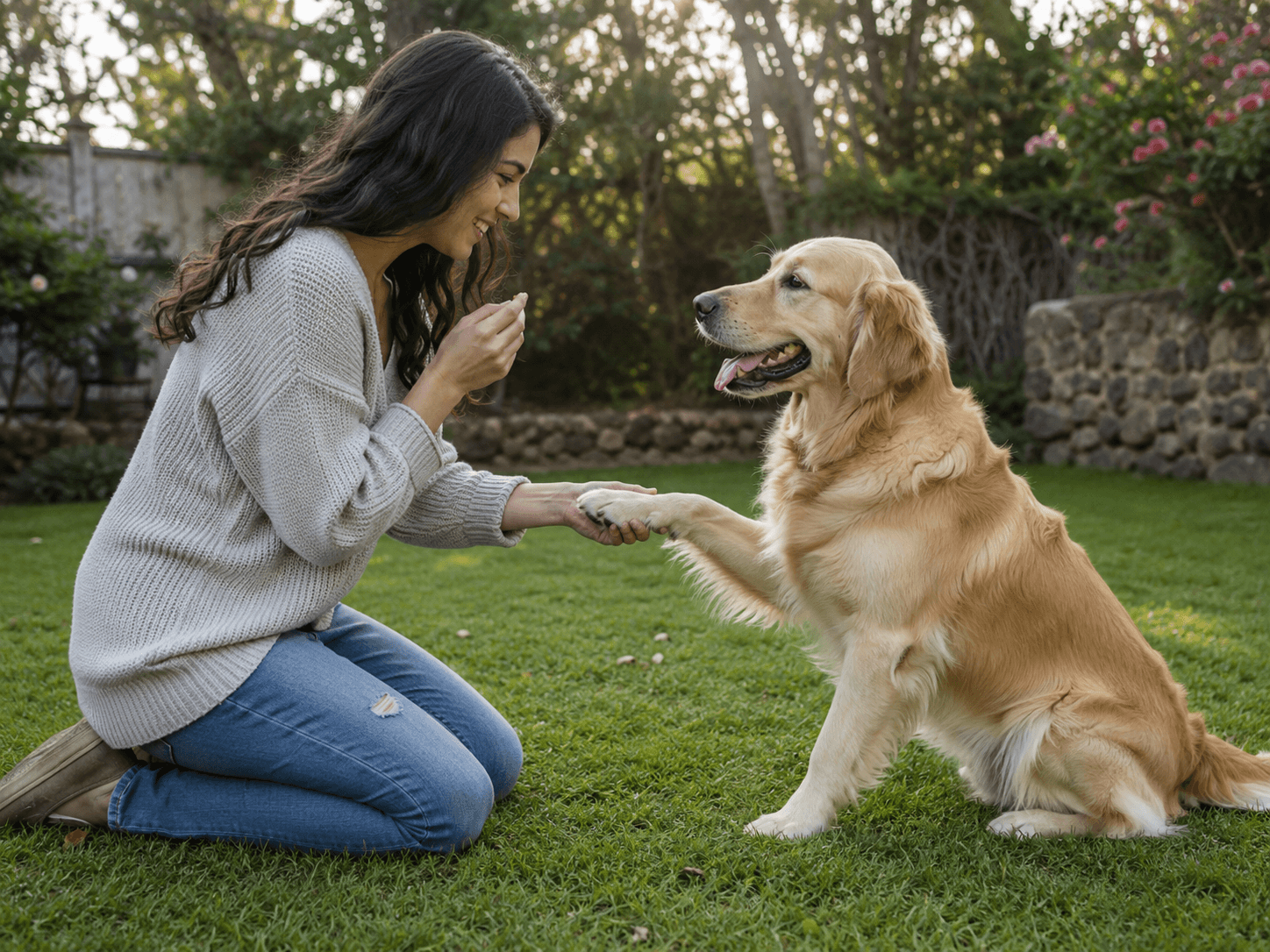
Reward-based training relies on treats, and that leads to a common worry: will all this food make my dog overweight? It is a fair concern, since treats can quietly add a surprising number of calories. The good news is that with smart choices and a few simple habits, you can train enthusiastically without expanding your dog's waistline.
Size matters most
The single biggest fix is shrinking your treats. Dogs work just as happily for a pea-sized morsel as a large biscuit, because the reward is about frequency and value, not volume.
- Break treats into tiny pieces, roughly the size of a pea
- Soft treats are ideal because dogs eat them quickly and stay focused
- Save large chews for downtime, not for rapid-fire training
A single training treat should be something your dog can swallow in a second so you can keep the session moving.
Follow the ten percent rule
A common guideline is that treats should make up no more than ten percent of your dog's daily calories. The rest should come from a balanced diet. On heavy training days, reduce your dog's meal portions slightly to account for the extra treats, so the total stays consistent.
Treats are a training tool, not a second dinner. Count them as part of the day's food, not as extras.
Choose healthier options
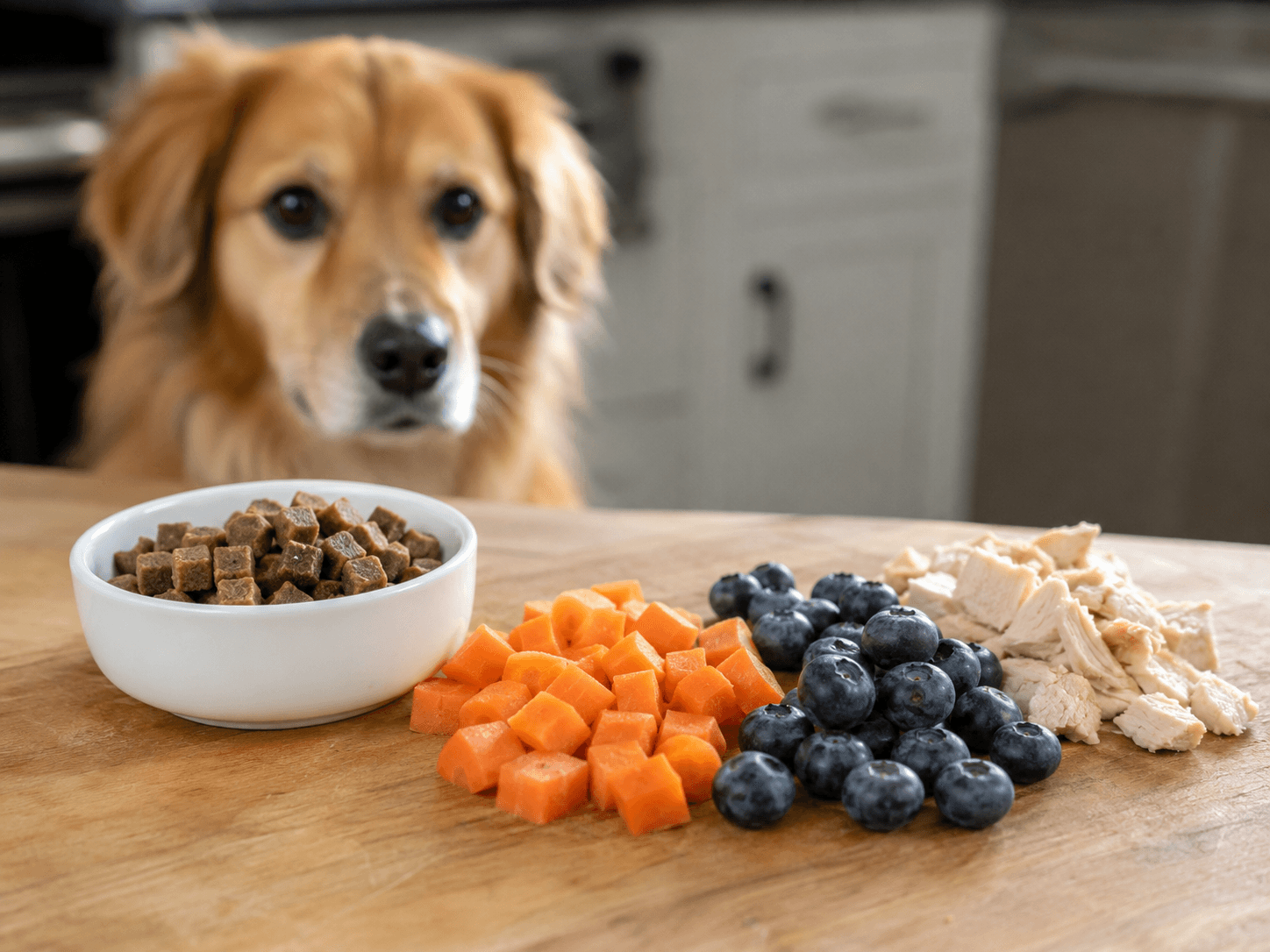
You do not need fancy packaged treats. Many wholesome foods make excellent, low-calorie rewards. Small pieces of cooked plain chicken, green beans, carrots, or blueberries work well for many dogs. Always introduce new foods gradually and check that they are safe, since some human foods like grapes, onions, and chocolate are toxic to dogs.
Use your dog's own food
For easy exercises at home, portion out part of your dog's daily kibble and use it as training rewards. This keeps calories in check automatically because the food is already part of their diet. Save higher-value treats for harder tasks, new environments, or strong distractions where you need extra motivation.
Match value to difficulty
Not every reward needs to be exciting. For known cues in the living room, plain kibble is plenty. For recall at the park or staying calm near another dog, bring out the chicken. Reserving your best treats for your hardest asks keeps them powerful and makes your training more efficient.
Prep treats in advance
A little preparation keeps your training smooth and your portions honest. Once a week, chop or portion your treats into tiny pieces and store them in the fridge or freezer so they are ready to grab. Keep a small pouch or container by the door and another where you train most. When rewards are pre-measured, it is far easier to stick to the ten percent rule and avoid the handful-here, handful-there creep that adds up.
Do not forget non-food rewards
Food is convenient, but praise, play, a favorite toy, and the chance to sniff are all rewards too. Mixing in these options keeps training fun, reduces reliance on treats, and reminds your dog that good things flow from you in many forms. A trim, well-fed dog who loves to train is entirely achievable with a little planning.
Want a plan built for your dog?
Get a free, personalized training plan in about 2 minutes.
Create My Free Plan