For a dog with noise phobia, a thunderstorm or fireworks display is not just annoying, it is terrifying. They may pace, pant, drool, hide, cling to you, or try to escape. This is genuine fear, not misbehavior, and it tends to worsen over time if ignored. With preparation and a calm plan, you can make these frightening events far more bearable.
Create a safe haven
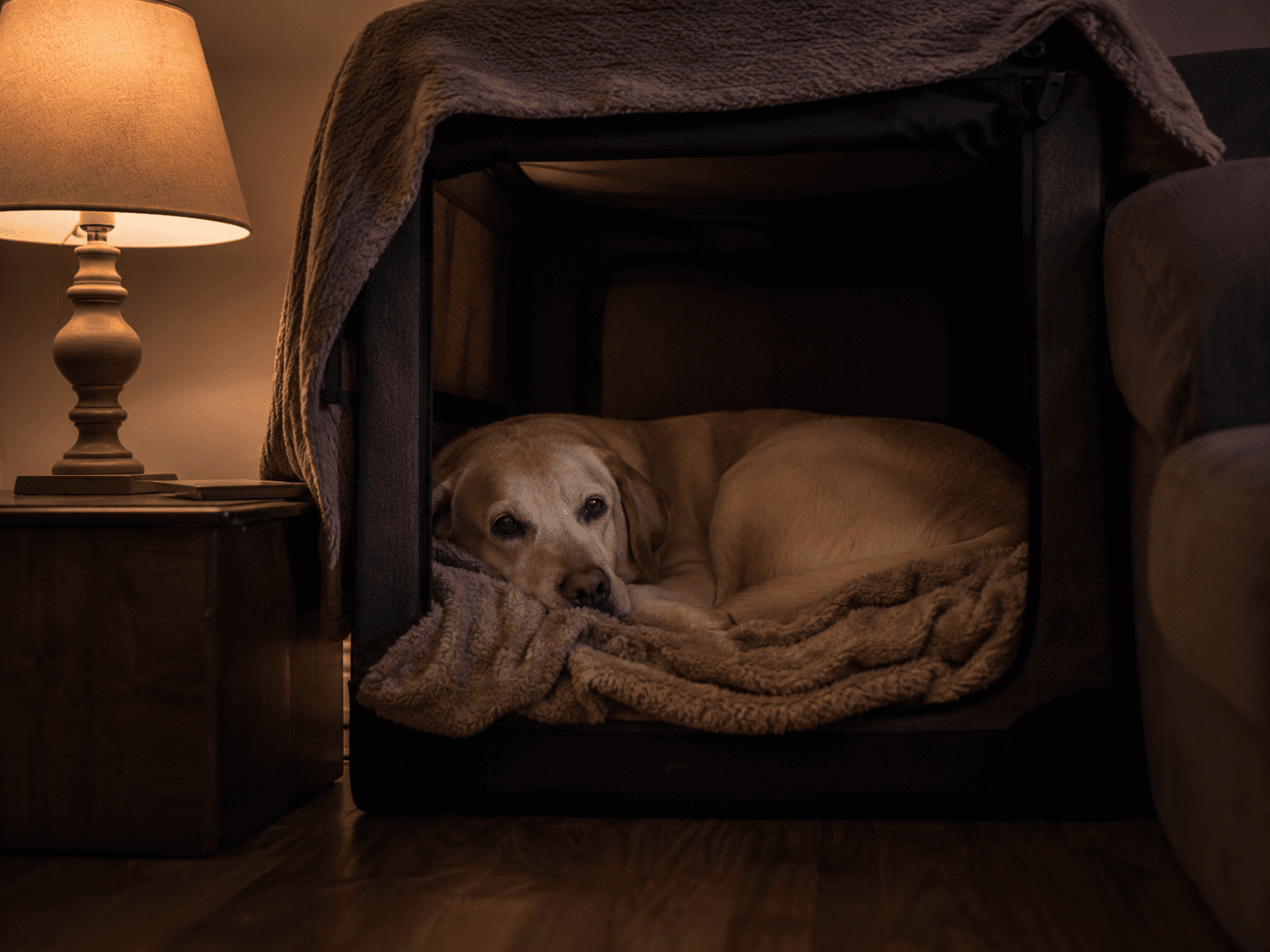
Every noise-sensitive dog needs a den, a spot where the sound is muffled and they feel secure.
- Choose an interior room with few windows, like a bathroom or closet
- Add their bed, a favorite blanket, and a piece of your worn clothing
- Play white noise, a fan, or calm music to mask the bangs
- Let your dog come and go, since forcing them to stay adds stress
Introduce this space on calm days so it already feels safe before a storm hits.
It is okay to comfort your dog
You cannot reinforce fear the way you reinforce a trained behavior. If your dog seeks you out during a storm, comforting them will not make the phobia worse. Sit with them, speak softly, and let them lean on you if that helps. What you want to avoid is your own anxious, frantic energy, which does tell your dog something is wrong.
Fear is an emotion, not a habit. Reassuring a scared dog is kindness, not reward.
Try calming aids
Several tools can take the edge off. Snug body wraps apply gentle, steady pressure that many dogs find soothing. Pheromone diffusers and calming supplements help some dogs. A long-lasting chew or a stuffed frozen food toy can give your dog something positive to focus on if they are calm enough to engage. Experiment on ordinary days to see what your dog responds to.
Desensitize between events
Over the long term, you can reduce your dog's reaction with sound desensitization. Play recordings of thunder or fireworks at a very low volume while feeding treats or playing, then increase the volume gradually over many sessions. Keep it quiet enough that your dog notices but does not panic. This slow work can genuinely change how your dog feels about the sound.
Prepare in advance
On days when storms or fireworks are expected, exercise your dog earlier so they are a little tired, feed them before the noise starts, and make sure they have gone to the bathroom. Close windows and curtains to dampen sound and block flashes, and double check that your yard and doors are secure, since panicked dogs are a top cause of lost pets on noisy holidays.
Make sure ID is up to date
Panicked dogs bolt, and noisy holidays are the busiest time of year for lost pets. Before storm or fireworks season, double check that your dog's collar tag and microchip details are current, and confirm your yard has no gaps a frightened dog could squeeze through. It is a five-minute task that can make the difference between a quick reunion and a heartbreaking search if your dog does manage to escape.
Know when to seek help
Severe noise phobia can be exhausting and even dangerous. If your dog's fear is intense, talk to your veterinarian, who may prescribe anti-anxiety medication for use during events. Combined with a safe space and gradual desensitization, most noise-phobic dogs can find real relief.
Want a plan built for your dog?
Get a free, personalized training plan in about 2 minutes.
Create My Free Plan