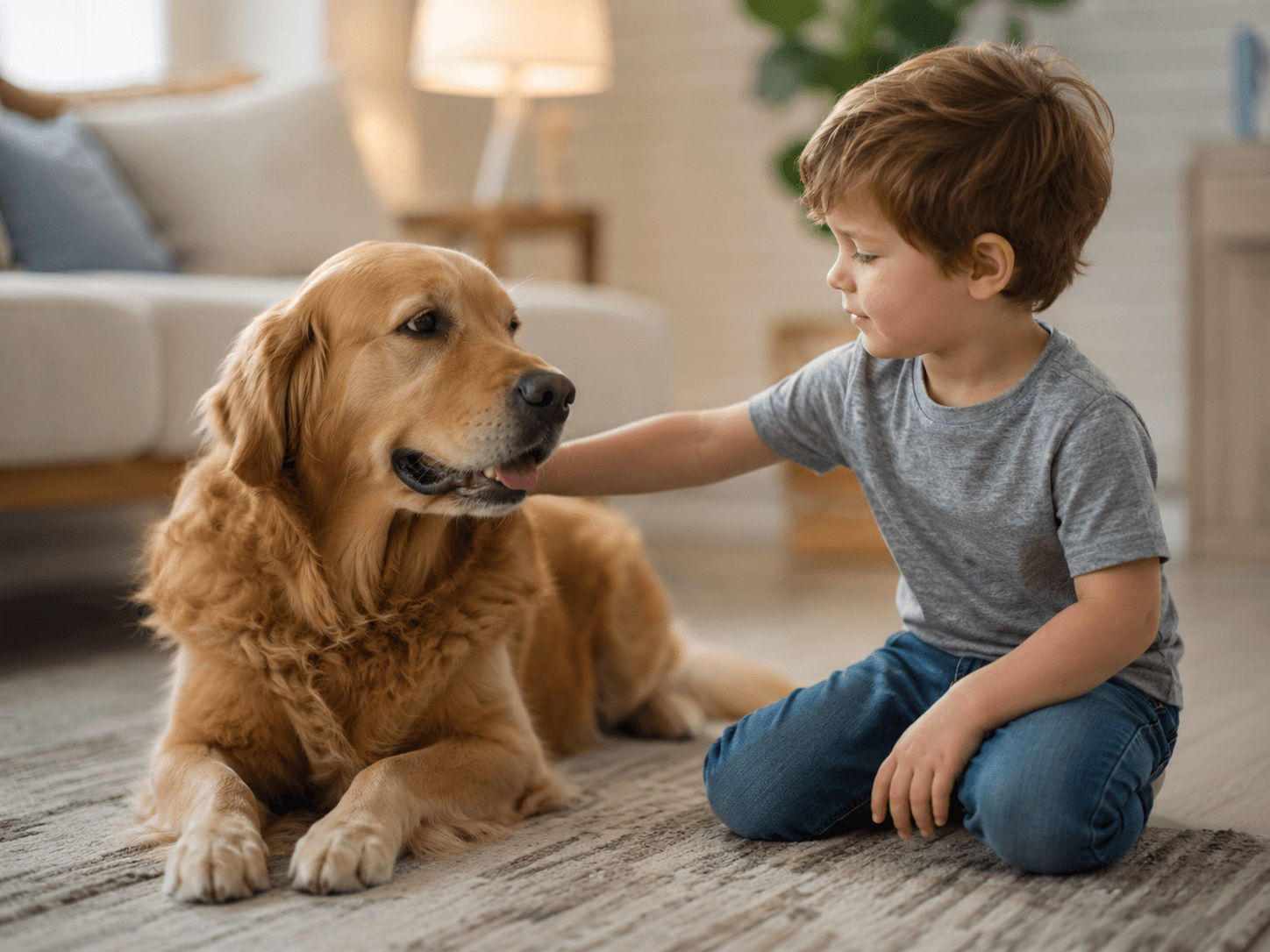
A child growing up with a dog can be a beautiful thing, teaching empathy, responsibility, and unconditional friendship. But dogs and children do not automatically understand each other, and most bites to kids come from the family's own dog in ordinary situations. With active supervision and a few clear rules, you can build a safe, happy relationship that both your child and your dog enjoy.
Supervise every interaction
The golden rule is simple: young children and dogs should never be left alone together, even for a moment, and even with a gentle dog. Supervision means actively watching and ready to step in, not just being in the same room on your phone. Most incidents happen in a split second during seemingly harmless play.
Teach children how to behave around dogs
Children need to learn that a dog is a living creature with feelings, not a toy.
- No climbing on, riding, or pulling ears and tails
- Let sleeping or eating dogs be, without disturbing them
- Pet gently on the chest or shoulder, not the face or head
- Never chase, corner, or take toys from the dog
Model this behavior yourself, and praise your child for calm, kind interactions.
Teach children to invite a dog over rather than approach, and to respect a dog's choice to walk away.
Learn your dog's warning signs
Dogs almost always signal discomfort before they escalate. Watch for lip licking, yawning, turning away, a tucked tail, or the whites of the eyes showing in a half-moon shape. These mean your dog needs space. If you consistently respond by giving them a break, your dog learns they can rely on you rather than resorting to a growl or a snap.
Never punish a growl
A growl is valuable communication, your dog's way of saying they are uncomfortable. If you punish growling, you may teach your dog to skip the warning and bite without notice. Instead, calmly end the situation, give your dog space, and think about what made them uneasy so you can prevent it next time.
Give your dog an escape
Every dog needs a safe retreat where children are not allowed to follow, such as a crate or a bed in a quiet room. Teach your child that when the dog goes to this spot, the dog is off-limits. Knowing they can leave a stressful situation makes dogs far more tolerant and relaxed around busy kids.
Adjust the rules as kids grow
What safety looks like changes with your child's age. Toddlers need constant hands-on supervision and physical barriers, while school-age children can learn to read a dog's signals and help with gentle training. Revisit your household rules as your child matures, giving them more responsibility only as they show they can respect the dog's boundaries. Growing into the relationship gradually keeps it safe and rewarding for both of them.
Include kids in positive routines
Under your guidance, let your child help with feeding, gentle training, and calm games of fetch. Being the source of good things helps your dog form a positive association with the child. Over time, with supervision and mutual respect, most dogs and children build a genuine, trusting bond that enriches both their lives.
Want a plan built for your dog?
Get a free, personalized training plan in about 2 minutes.
Create My Free Plan