Nearly every new puppy owner is shocked by how much those tiny teeth hurt. Puppy biting and mouthing is completely normal, it is how puppies explore the world and play, but it needs gentle guidance so it fades as your puppy grows. The aim is not to punish biting, but to teach your puppy to control the pressure of their mouth and to redirect that urge onto appropriate things.
Understand why puppies bite
Puppies mouth for several reasons: they are teething and their gums ache, they are playing the way they did with littermates, and they are investigating textures. Because it is driven by instinct and physical need, biting cannot simply be forbidden, it has to be redirected and outgrown.
Teach bite inhibition
Bite inhibition is your puppy learning that human skin is delicate. Littermates teach this by yelping and stopping play when bitten too hard, and you can do the same.
- When your puppy bites too hard, let out a calm "ouch" and stop moving
- Briefly remove your attention by standing up or turning away
- Return to gentle play after a few seconds
- Repeat consistently so your puppy learns hard bites end the fun
Over time, your puppy learns to use a softer and softer mouth to keep the game going.
You are not teaching your puppy to never mouth, you are teaching them that gentle is the only setting that works on people.
Always offer an alternative
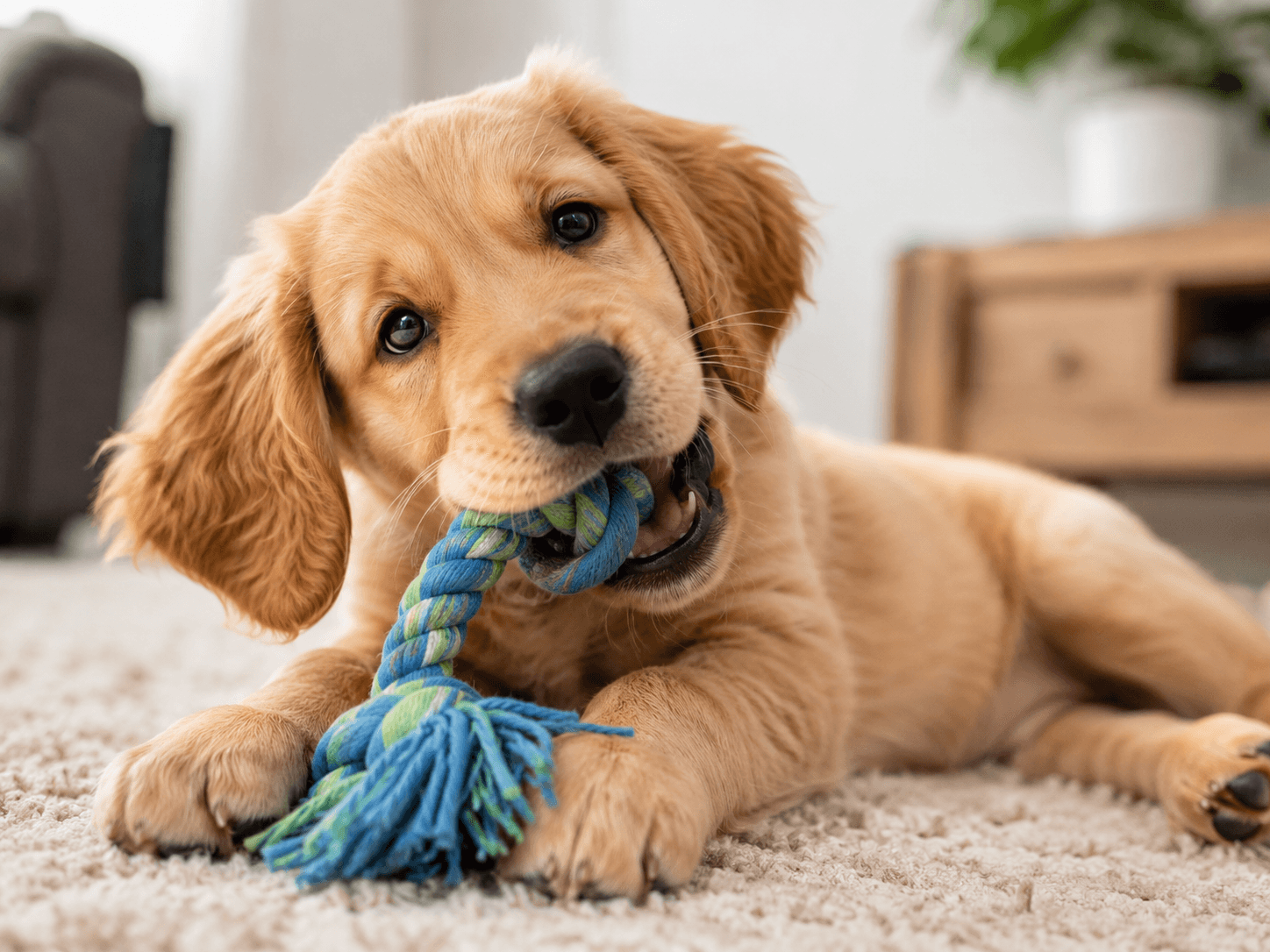
A puppy who wants to bite needs something acceptable to bite instead. Keep chew toys within reach and, the moment your puppy starts mouthing you, calmly swap in a toy. Rotate a few toys to keep them interesting, and offer frozen chews or a damp frozen washcloth to soothe sore teething gums.
Manage energy and rest
Much of the worst biting happens when a puppy is overtired or overstimulated, much like a cranky toddler. If your puppy becomes frantic and nippy, it is often a sign they need a nap, not more play. Enforce quiet rest time in a pen or crate, since a well-rested puppy has far better manners.
Avoid rough games and punishment
Wrestling with your hands or waving fingers in your puppy's face teaches them that hands are toys, so use tug ropes and toys for physical play instead. Avoid smacking, holding the muzzle, or yelling, because these can frighten your puppy, damage trust, and sometimes make biting worse. Calm, consistent redirection is far more effective.
Get the whole family on board
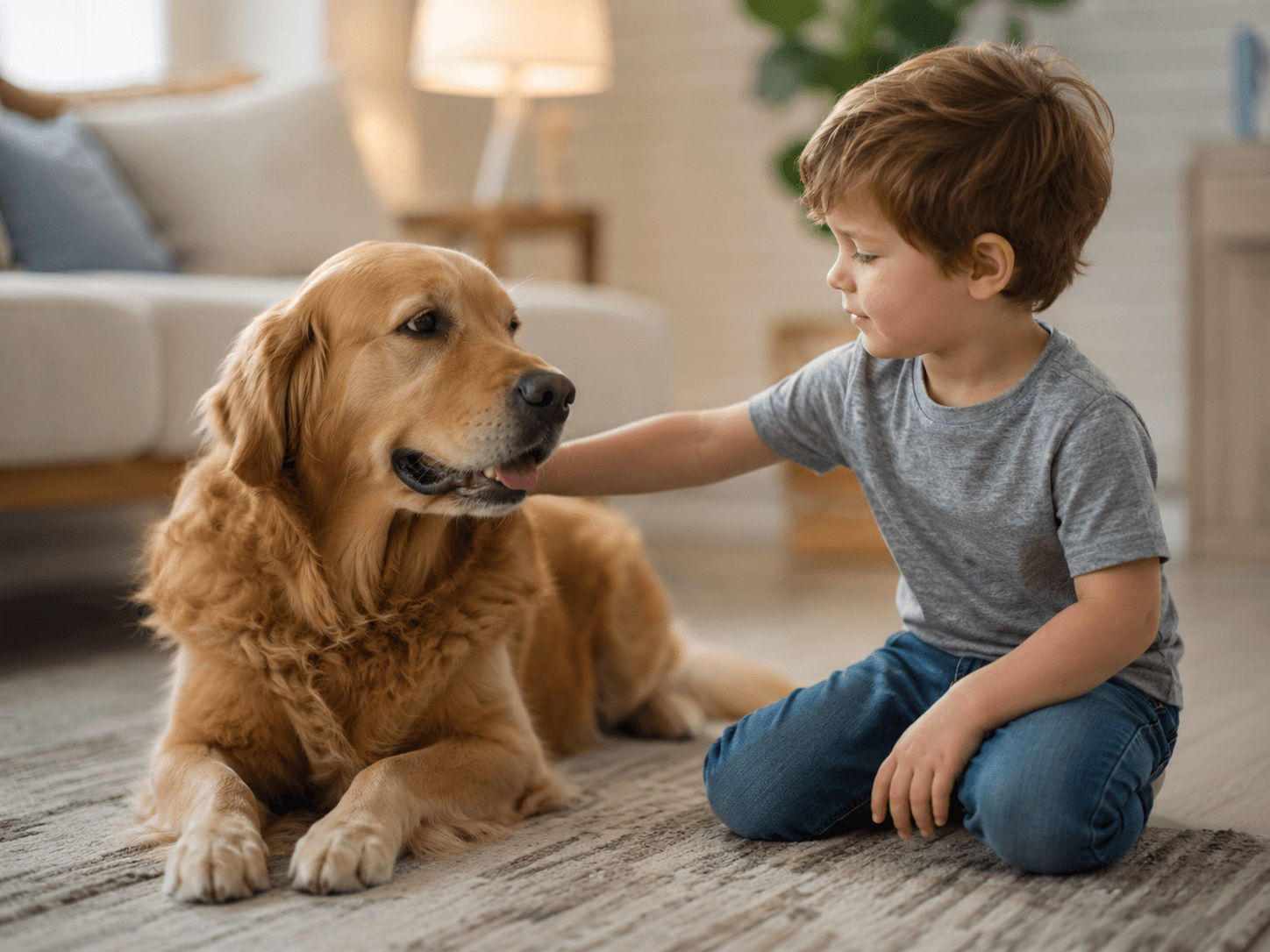
Puppies learn fastest when everyone responds the same way. If one person yelps and pauses play while another wrestles and roughhouses, your puppy gets a confusing, mixed message and progress stalls. Agree on the plan as a household, coach any children on the calm "ouch and pause" approach, and keep toys handy in every room so redirecting is easy for everyone. Consistency across people is what makes the biting fade.
Be patient, it passes
Puppy biting peaks during teething and then steadily improves, usually settling down by five to six months as the adult teeth come in and your training takes hold. Stay consistent, protect your puppy's rest, and keep redirecting to toys. Before long, those painful little needles will be a distant memory.
Want a plan built for your dog?
Get a free, personalized training plan in about 2 minutes.
Create My Free Plan