House training is less about your puppy being "good" or "bad" and more about you building a predictable routine. Puppies have small bladders and short memories, so success comes from preventing accidents rather than punishing them. With a clear schedule and consistent rewards, most puppies are reliably house trained within a few weeks.
Start with a rhythm
Take your puppy outside to the same spot at every natural transition in the day. A young puppy generally needs to go:
- First thing in the morning, the moment they wake up
- After every meal and every drink of water
- After a nap, a play session, or any excitement
- Right before bed, and once overnight for very young pups
A rough guide for how long a puppy can hold it is their age in months plus one, in hours. A three-month-old puppy may last around four hours during the day, but never treat that as a target to push toward.
Reward like it matters
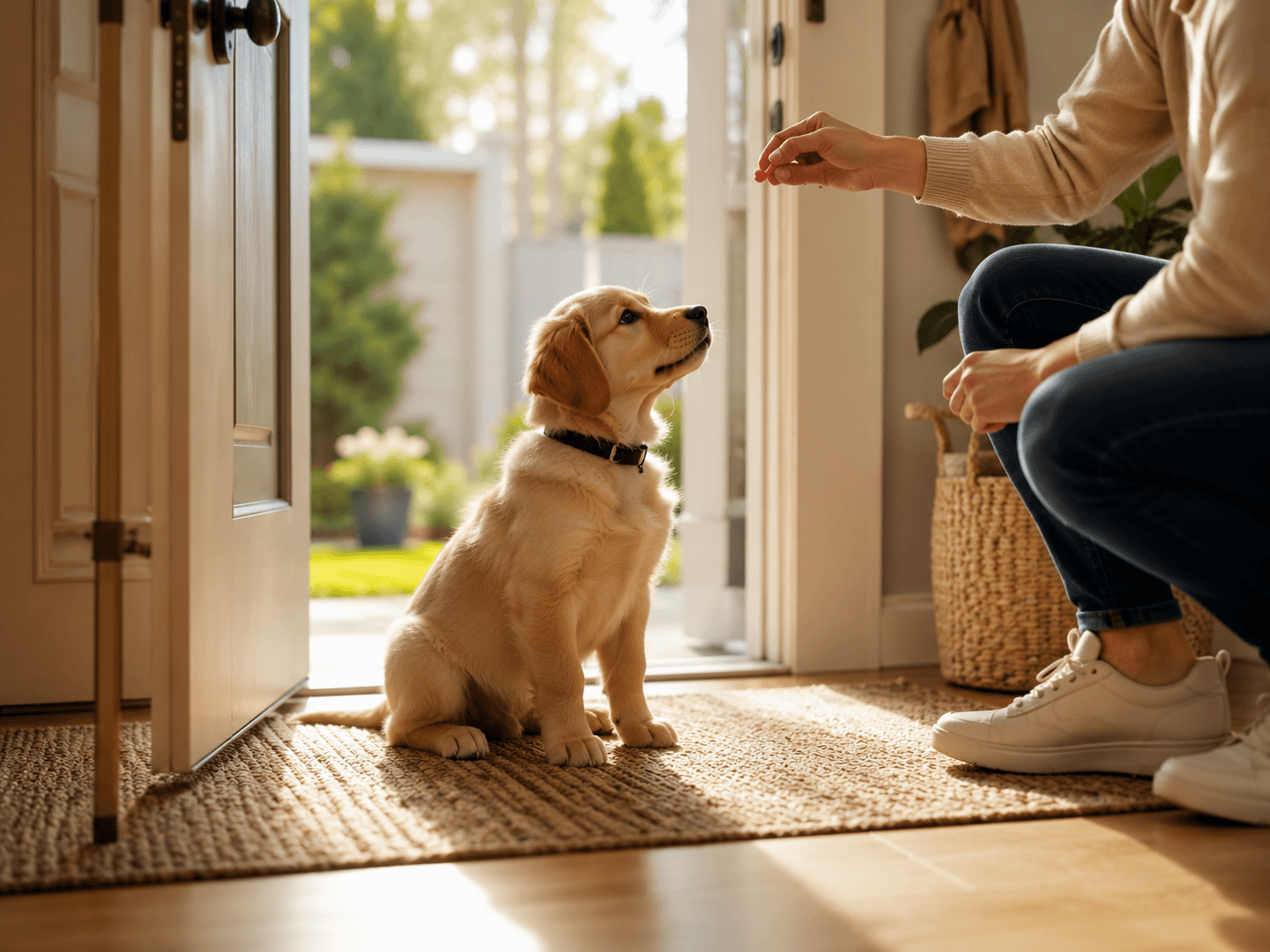
When your puppy finishes going in the right place, mark it instantly with a cheerful word and hand over a small, tasty treat within two seconds. That tight timing is what teaches your puppy that outside is where the good things happen. Praise given at the back door thirty seconds later teaches nothing.
The single biggest house-training mistake is rewarding too late. Treat the moment they finish, not when they come back inside.
Supervise or contain
Between potty trips, your puppy should either be actively watched or resting in a safe, appropriately sized space such as a pen or crate. Dogs naturally avoid soiling where they sleep, so a correctly sized crate becomes a helpful ally. If you cannot watch your puppy, that is exactly when accidents happen.
Watch for the tell-tale signs that a trip is due: sudden sniffing, circling, whining, or drifting away from you toward a quiet corner. The instant you see them, calmly scoop your puppy up and head outside.
Handle accidents calmly
Accidents will happen, and how you respond shapes how quickly things improve. If you catch your puppy mid-accident, interrupt gently with a soft sound and carry them outside to finish. Never scold, rub their nose in it, or punish after the fact. Punishment simply teaches a puppy to hide when they need to go, which makes everything harder.
Clean every accident with an enzymatic cleaner rather than a standard household product. Ordinary cleaners leave scent traces that draw your puppy back to the same spot, while enzyme cleaners break the odor down completely.
Build toward independence
As your puppy strings together dry days, slowly expand their freedom one room at a time and stretch the gaps between trips. If you hit a setback, it usually means you moved too fast, so simply return to closer supervision and shorter intervals for a few days.
Consistency from every member of the household is what ties it all together. When everyone uses the same spot, the same reward, and the same routine, your puppy learns the rules in a fraction of the time. Stay patient, keep it positive, and the habits you build now will last a lifetime.
Want a plan built for your dog?
Get a free, personalized training plan in about 2 minutes.
Create My Free Plan