Bringing home a new puppy is exciting, but your resident dog may not share your enthusiasm right away. First impressions matter, and a rushed or chaotic introduction can create tension that lingers for months. With a little planning, you can help both dogs start off on the right paw and build a genuine friendship.
Meet on neutral ground
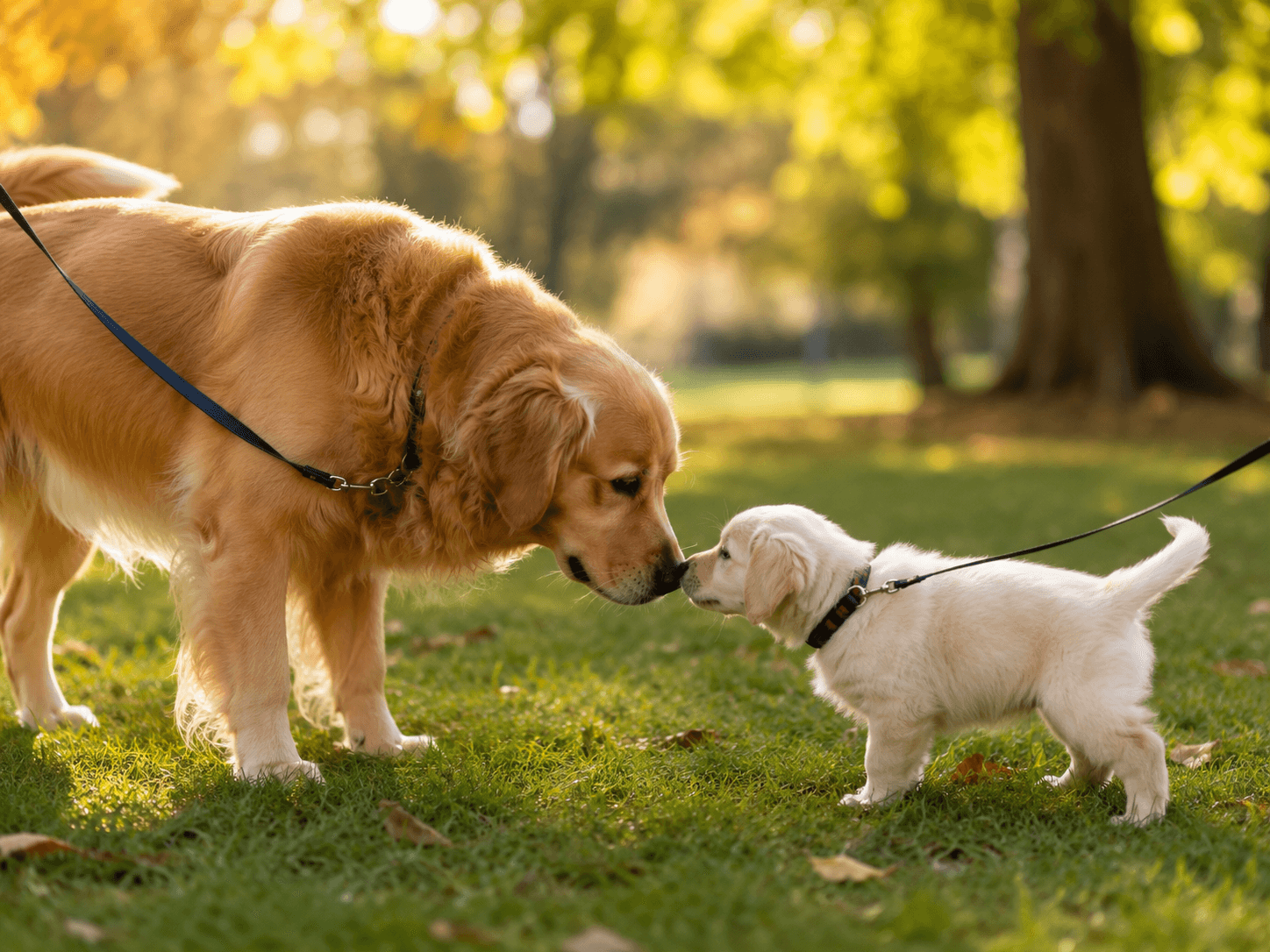
Dogs are territorial, so introducing a puppy inside your resident dog's home can trigger guarding. Whenever possible, arrange the first meeting somewhere neutral, such as a quiet park or a friend's yard. Keep both dogs on loose leashes and let them greet in a curved approach rather than head-on, which dogs find confrontational.
Watch the body language
Learning to read your dogs tells you whether things are going well.
- Loose, wiggly bodies and play bows are good signs
- Stiff posture, hard stares, or a frozen stance mean take a break
- Lip licking, yawning, and turning away are signs of stress
- Brief pauses in play let both dogs reset and are healthy
If either dog looks tense, calmly increase the distance and let them observe each other before trying again.
Go slow to go fast. A patient first week prevents conflicts that can take months to repair.
Manage the home carefully
When you bring the puppy inside, pick up your resident dog's favorite toys, chews, and food bowls to remove obvious sources of conflict. Give each dog their own space, and use baby gates or a crate so they can see and smell each other without full contact when you cannot supervise. Never leave a new puppy and an adult dog alone together until you are completely confident in their relationship.
Protect your resident dog's routine
Your older dog needs to know their world is not being taken over. Keep their walks, feeding times, and one-on-one attention as consistent as possible, and greet your resident dog first when you come home. Feeling secure makes them far more generous toward the newcomer.
Give the puppy structure
Puppies can be relentless, and even a friendly adult dog needs breaks from sharp teeth and endless energy. Step in before your resident dog feels harassed, and teach the puppy that leaving the older dog alone earns rewards. Enforced nap times in a pen or crate protect everyone's sanity.
Feed and rest them separately
Mealtimes and sleep are common flashpoints, so keep them apart at first. Feed the dogs in different rooms or behind a gate to prevent any food guarding, and give each dog their own bed and crate so they are never forced to share resting space. As trust grows over the following weeks you can relax these boundaries, but starting with clear separation prevents the small squabbles that can sour a new relationship.
Reward calm togetherness
Rather than only rewarding play, notice and reward the quiet moments when both dogs relax near each other. Feed them treats for calm coexistence, take them on parallel walks, and let their bond build naturally over days and weeks. Most dogs become comfortable companions within a couple of weeks when introductions are handled with patience and care.
Want a plan built for your dog?
Get a free, personalized training plan in about 2 minutes.
Create My Free Plan