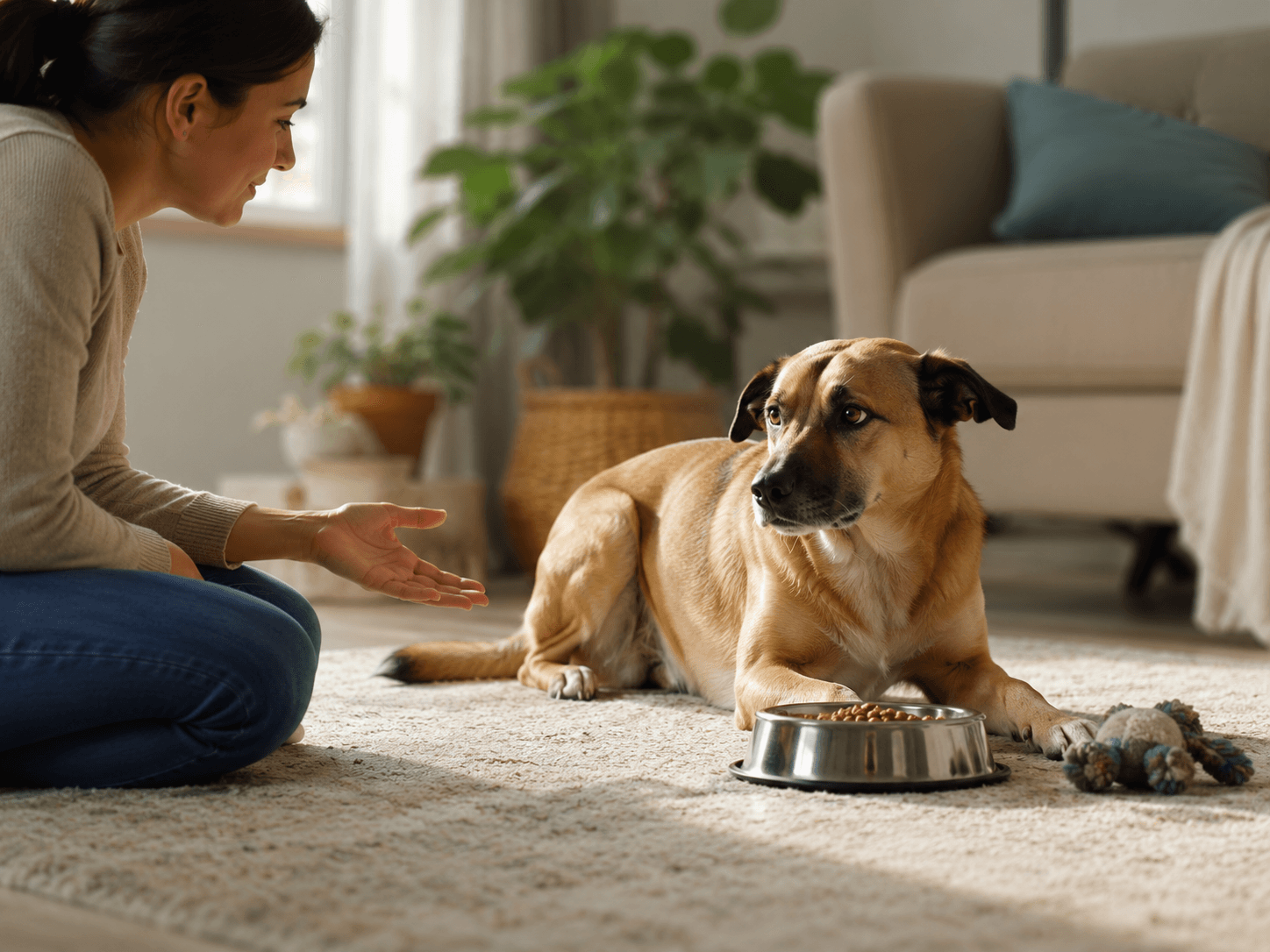

The old saying is wrong. Senior dogs are perfectly capable of learning, and training in the later years does far more than teach cues. It keeps aging minds engaged, supports mobility, and deepens the bond you share. With a few thoughtful adjustments for their changing bodies, older dogs often make wonderfully attentive students.
Why keep training an older dog
Mental stimulation is to an aging brain what exercise is to the body. Learning and problem solving can help slow cognitive decline and stave off the boredom that sometimes leads to new behavior problems in senior years. Training sessions also give a dog whose physical activity may be slowing down a satisfying job to do, which supports their emotional wellbeing.
Adjust for comfort
An older dog may have stiff joints, less stamina, or fading senses, so meet them where they are.
- Keep sessions short and sweet, just a few minutes at a time
- Train on non-slip surfaces to protect achy joints and build confidence
- Swap demanding positions like fast downs for gentler options if needed
- Use soft, easy-to-chew treats that are kind on older teeth
Watch for signs of fatigue or discomfort and stop before your dog is tired. Ending on a high note keeps an older dog eager to try again.
Work with changing senses
Many senior dogs lose some hearing or eyesight, but training can adapt beautifully. If your dog is going deaf, teach or lean on clear hand signals and use vibrations, like a gentle stomp on the floor, to get their attention. If eyesight is fading, keep furniture in familiar places and rely more on scent and sound cues. Dogs are remarkably adaptable when we adjust our communication to suit them.
Rule out pain first
If an older dog suddenly seems stubborn, distracted, or reluctant to do something they used to enjoy, the cause is often physical rather than behavioral. Pain, arthritis, or cognitive changes can all look like disobedience. A veterinary check is always worthwhile when behavior shifts, so you can address any discomfort and train around your dog's real capabilities.
Focus on enrichment and ease
Training a senior dog does not need to be ambitious. Simple scent games, gentle new tricks, food puzzles, and short refreshers of familiar cues all provide valuable enrichment. Teaching a cue like "step up" or "wait" can even make daily care and vet visits easier for both of you. Above all, these quiet moments together remind your long-time companion that they are still seen, still capable, and still very much part of the team. Age is not a barrier to learning, it is simply a reason to be a little gentler about how you go.
Want a plan built for your dog?
Get a free, personalized training plan in about 2 minutes.
Create My Free Plan