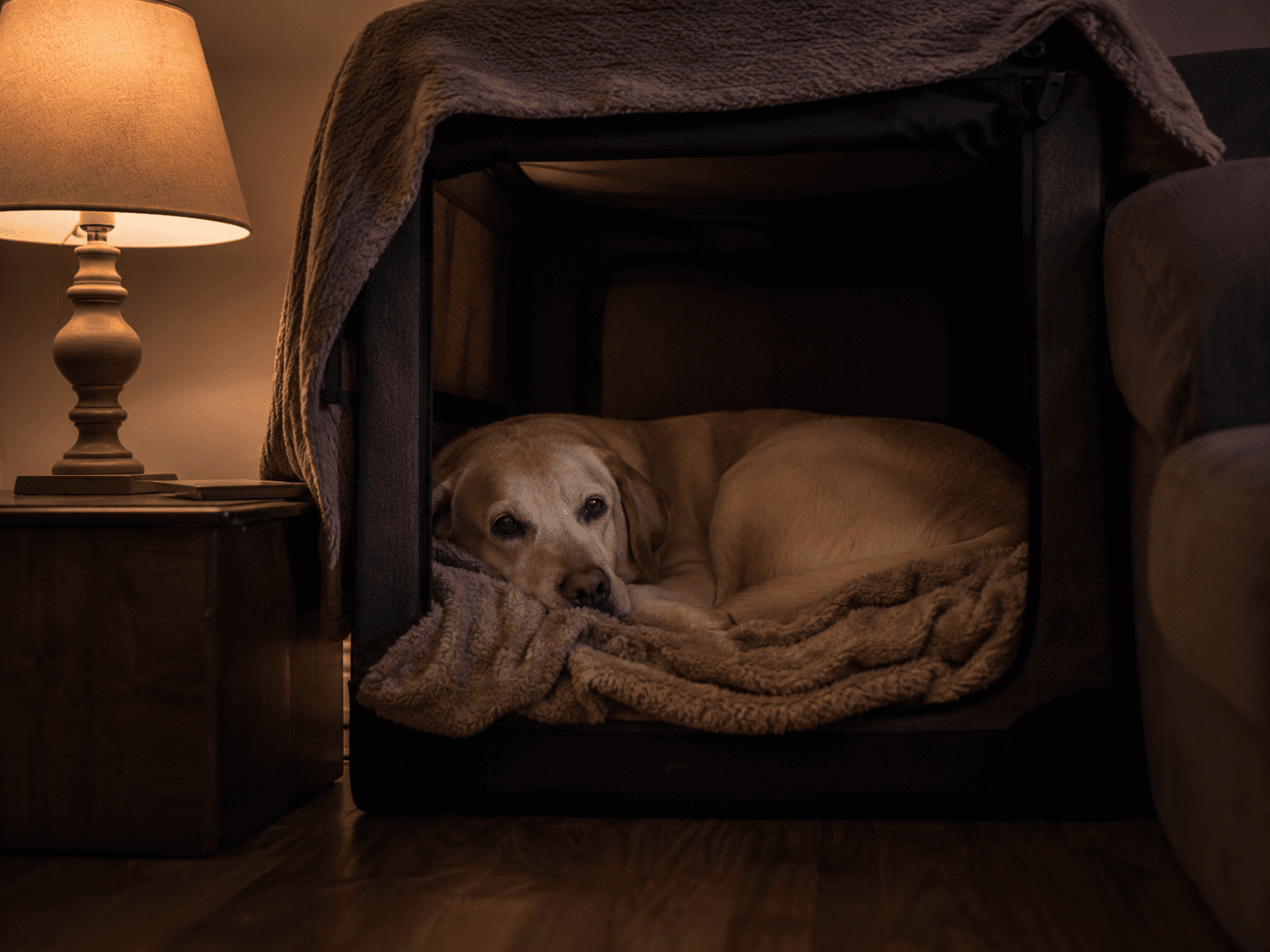
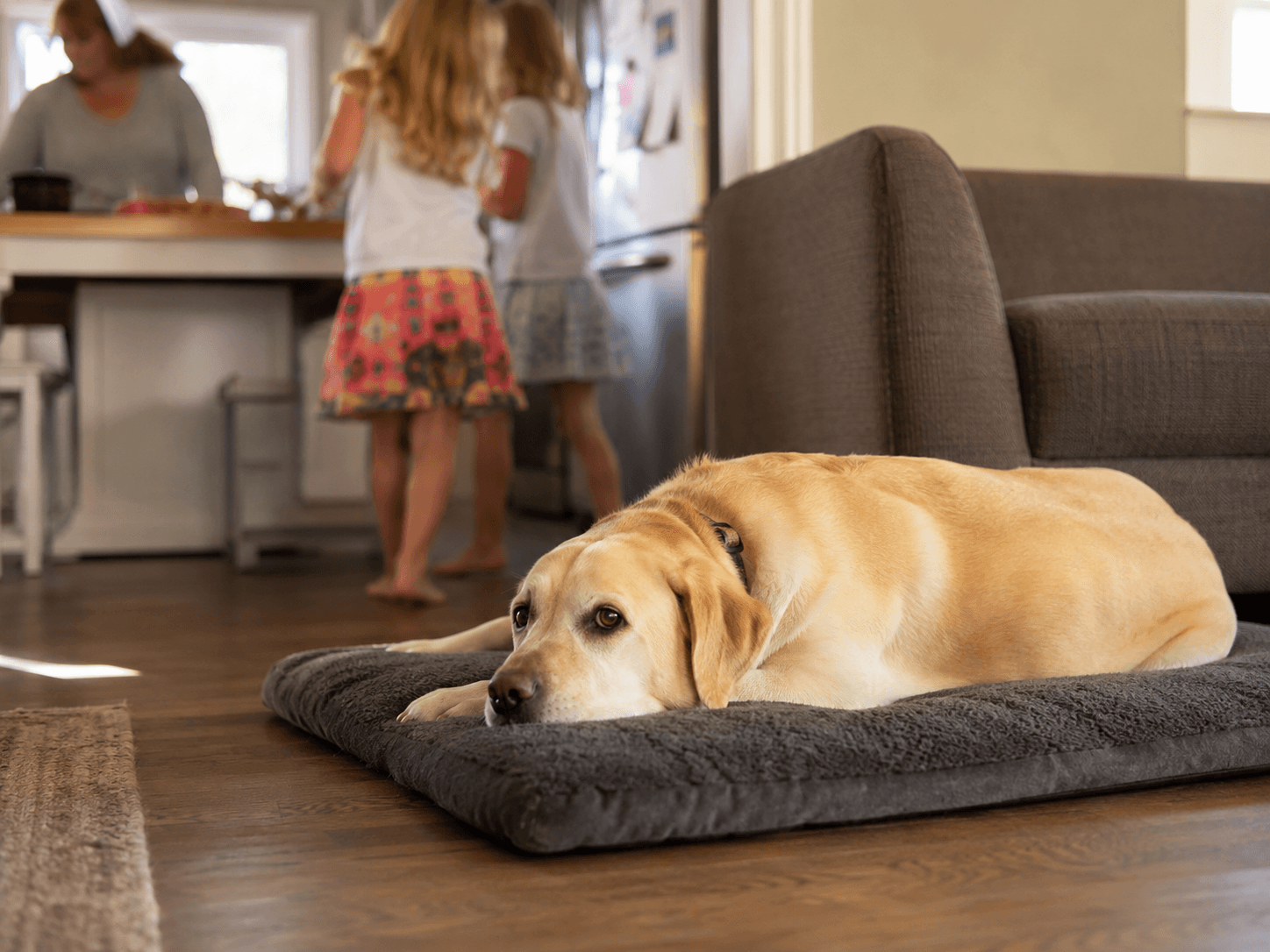
If your dog struggles to settle, pesters guests, or hovers underfoot in the kitchen, teaching "place" can transform your home. "Place" means go to a specific mat or bed and stay there, relaxed, until released. It gives your dog a clear job, a predictable routine, and a healthy off-switch, and it gives you a polite way to manage busy moments.
Pick a dedicated spot
Choose a mat, bed, or towel that is only used for this exercise, so it becomes a clear signal. Place it somewhere your dog can still see the family, since isolation defeats the purpose. The mat should be comfortable and just big enough for your dog to lie down on fully.
Reward stepping onto the mat
Start by simply making the mat the best place in the room.
- Toss a treat onto the mat and let your dog step on to eat it
- Every time a paw lands on the mat, mark with "yes" and reward
- Reward again while your dog remains on the mat to build value for staying
- Once they return to the mat on their own, add the cue "place"
At this stage you are not asking for stillness yet, just teaching that the mat pays.
Reward calm heavily. The behavior you feed on the mat is the behavior you will get.
Build duration and relaxation
Once your dog goes to the mat on cue, start rewarding them for staying a little longer each time. Wait for signs of genuine relaxation, such as lying down, a hip roll, or a sigh, and reward those calm moments especially well. You are teaching not just location but a relaxed state of mind. Deliver treats slowly and quietly to keep the mood low-key.
Add a release word
Your dog needs to know when they are free to leave. Choose a clear release word like "okay" or "free," and use it every time you end the exercise. Until you say it, staying on the mat is the job. A reliable release prevents your dog from wandering off whenever they feel like it.
Increase distance and distraction
Gradually practice stepping away from the mat, then moving around the room, then adding real-life distractions like a knock at the door. Build these challenges slowly, and go back a step whenever your dog struggles. The goal is a dog who can hold their place even when something interesting is happening nearby.
Keep sessions short and frequent
"Place" builds fastest in brief, upbeat sessions rather than long ones. A few minutes several times a day beats a single marathon that leaves your dog restless. End each session before your dog gets bored, and always release them clearly so they know the job is done. Little and often is the pattern that turns a new cue into a dependable habit your dog offers without hesitation.
Put it to work
Once "place" is solid, use it during dinner, when guests arrive, or any time you need your dog calm and out from underfoot. Many dogs come to love their mat as a safe, predictable spot to unwind. Far from being a punishment, a good "place" cue gives your dog structure and peace, and gives you a calmer, more manageable household.
Want a plan built for your dog?
Get a free, personalized training plan in about 2 minutes.
Create My Free Plan